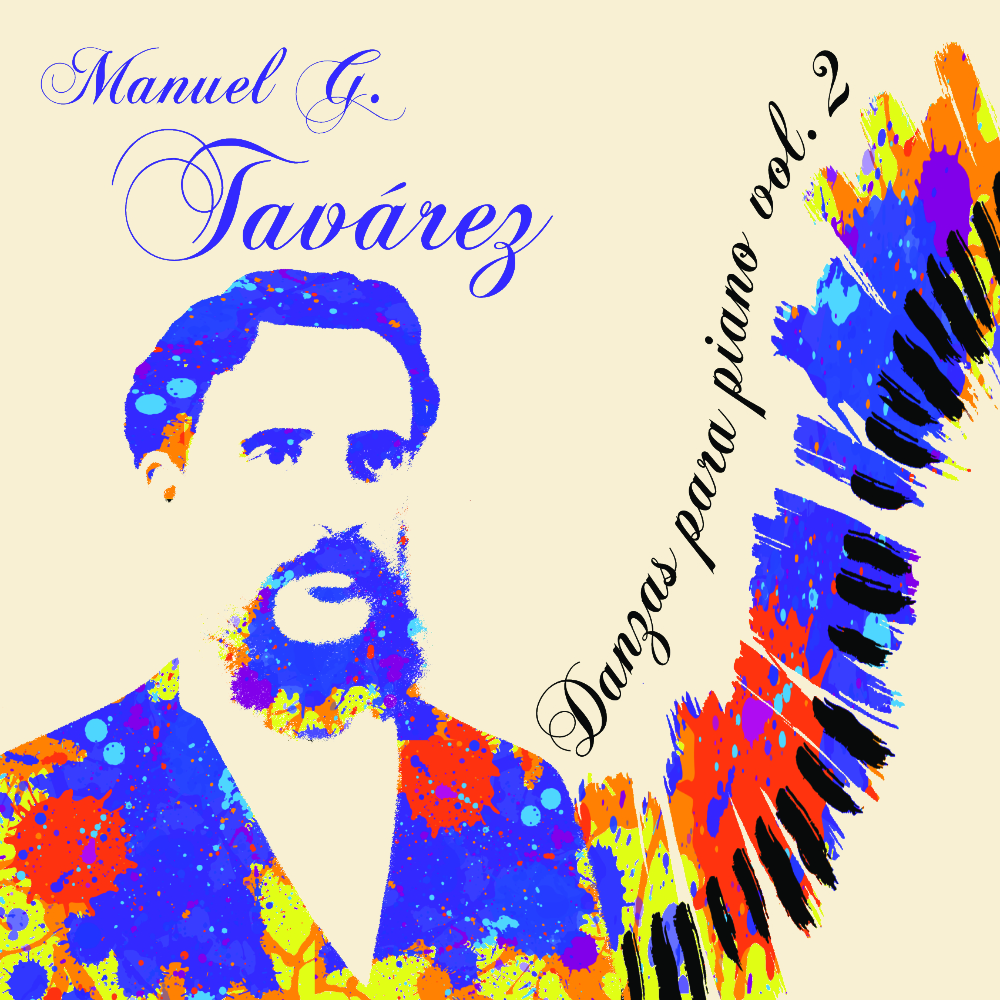
The discography of Manuel Gregorio Tavárez is regrettably scant. Prior to this project, only two recordings had been devoted to his music: the first performed by his daughter Elisa Tavárez (1957), and the second by Jesús María Sanromá (1984). A number of danzas were also recorded by pianists José Enrique Pedreira, Elías López Sobá, and Irma Isern, though only Margarita has a substantial catalog, with more than nine versions in various instrumentations.
This second volume contains eleven danzas. The remaining works will be included in a forthcoming third volume. The printed scores of all extant danzas are now available in two volumes on Amazon.com.
Tavárez elevated the danza to the level of a Creole song without words: he crystallized its form, established the elastic tresillo as the preferred accompanying rhythm, refined the melody, and imbued it with a melancholic air. Subsequent composers of the genre would respond to this model—either by developing it further, as Quintón and Pedreira did, or by steering it in new directions, as his disciple Morel Campos would do.
We wish to thank the students of the Conservatorio de Música de Puerto Rico for their enthusiasm in this project. It is heartening to see new generations discover and appreciate the pillars of Puerto Rico’s musical heritage.
— Emanuel Olivieri